
Load Flow Study
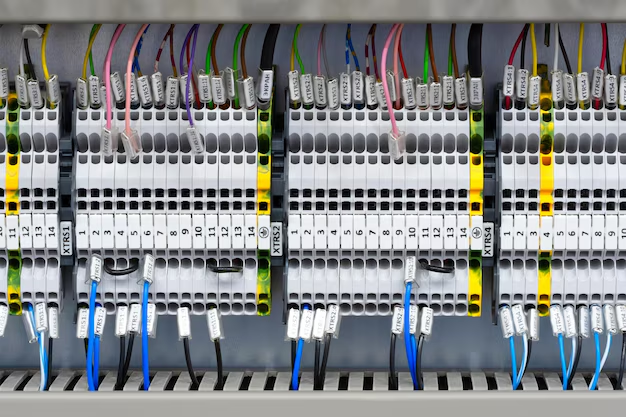
A Load Flow Study, also known as a Power Flow Analysis, is a critical electrical system study used to evaluate the steady-state performance of power networks under various operating conditions.
At Bigeta Energy, we conduct Load Flow Studies using ETAP software to analyze voltage levels, power flow, equipment loading, and system losses. Our studies help improve system reliability, operational efficiency, and electrical network performance while identifying potential overloads and voltage issues.With increasing energy demand and evolving electrical infrastructure, Load Flow Studies are essential for ensuring stable, efficient, and future-ready power systems.
What is a Load Flow Study and Why is it Important?
A Load Flow Study (Power Flow Analysis) evaluates how electrical power flows through a system under different operating conditions. It determines key parameters like bus voltages, power flow, equipment loading, system losses, power factor, and voltage drops.Using ETAP software, engineers simulate the electrical network to identify issues such as voltage instability, overloads, high losses, and poor power factor.
This study is important because modern power systems are constantly changing due to growing demand, expansions, and renewable integration. Without it, systems may face inefficiencies, downtime, and reliability issues. A Load Flow Study helps improve system reliability, reduce losses, enhance efficiency, and ensure safe future expansion.

Our Load Flow Study Approach
Data Collection
We collect all required electrical system data including Single Line Diagrams (SLD), transformer details, cable schedules, generator data, utility supply information, connected load details, and protection system information to ensure accurate analysis.
ETAP System Modelling
A detailed ETAP model is developed representing the complete electrical network, including all major components and operating parameters for precise simulation.
Scenario Simulation
Multiple operating conditions are simulated such as normal, peak load, reduced load, emergency conditions, equipment outages, and future expansion cases to evaluate system behavior and identify limitations.
Result Analysis
The simulation results are analyzed to identify voltage deviations, equipment overloads, power losses, reactive power imbalance, and overall network performance issues.
Recommendations and Optimization
Based on findings, we provide practical solutions such as capacitor bank sizing, transformer and cable upgrades, network reconfiguration, reactive power compensation, and system balancing to improve reliability and efficiency.
Key Benefits of Load Flow Study
Voltage Regulation and Stability
A Load Flow Study helps maintain stable voltage levels by identifying over-voltage, under-voltage, voltage drops, and reactive power issues. It supports corrective actions like transformer tap changes, capacitor banks, and network balancing to improve voltage stability.
Power Loss Reduction
Load Flow Analysis detects losses due to cables, transformers, reactive power flow, and unbalanced loading, enabling optimization of the network and reduction of energy wastage.
Equipment Loading Verification
It ensures safe operation of transformers, cables, generators, switchgear, and busbars by checking loading levels and capacity limits, preventing overheating and equipment failure.
Future Expansion Planning
The study supports system growth by evaluating capacity for additional loads, guiding transformer and feeder upgrades, infrastructure expansion, and future-ready system design.
Renewable Energy Integration
It evaluates the impact of solar and distributed generation by analyzing reverse power flow, voltage variations, grid interaction, and system stability, ensuring smooth renewable integration.
Our Trusted Customers


Partner with Bigeta Energy Solutions
Unlock efficiency, drive sustainability and build a future powered by smarter energy management.